Control the system risk
Introduction
Outdoor stage lighting procurement requires a model-specific project information trail and an operating plan, not a catalogue label alone.
A fixture may carry an IP code while a cable, unused port, power distribution or operating procedure creates a different exposure risk. Project teams therefore need a plan covering transport, setup, exposure, teardown, inspection and cleaning. The same rating can lead to different decisions for a sheltered corporate event, a coastal festival and a permanent installation.
The IEC 60529 standard classifies degrees of protection provided by enclosures. The IEC Electrotechnical Vocabulary explains that an IP classification applies to an equipment enclosure and addresses access to hazardous parts, ingress of solid foreign objects and, where indicated, harmful ingress of water. It describes a protection boundary, not the commercial suitability of an entire show system.
Read the code precisely
What IP65 Means
IP65 is a numerical enclosure classification with two characteristic numerals.
- First numeral 6
- Dust-tight enclosure protection. The classification addresses ingress of dust and access to hazardous parts under the applicable test method.
- Second numeral 5
- Protection against water jets. The enclosure is evaluated under defined test conditions, with acceptance based on whether water enters in a harmful quantity.
Keep the phrase under defined test conditions attached to every purchasing interpretation. A controlled test does not reproduce every combination of wind-driven rain, aging seals, impact, salt, detergents, heat cycles, incorrect covers or damaged cables found on a touring site.
Tie the rating to the configuration tested. The report should identify the model, enclosure, connector set, protective covers, revision, standard and laboratory. A report for another model or earlier enclosure does not automatically validate the quoted product.
The 2025 ANSI/NEMA C136.25, written for roadway and area lighting, adds two useful cautions: testing is performed on new luminaires and does not indicate lifetime or reliability; seals and gaskets can deteriorate with environmental and thermal exposure. It is not a stage-light certificate, but the lifecycle principle is relevant to rental fleets.
Prevent over-interpretation
What IP65 Does Not Mean
Water-jet protection is not a universal outdoor-use guarantee.
- It does not mean submersible. Avoid situations where pooling or flooding can immerse connectors or enclosure joints unless the manufacturer explicitly documents that use.
- It does not guarantee permanent outdoor installation. The exact manual must define acceptable orientation, shelter, inspection and removal limits.
- It does not automatically cover every connected cable, coupler, adapter, termination or unused port.
- It is not a certification statement by itself. Do not say certified unless the responsible report supports that exact claim and scope.
The official CHAUVET Professional ÉPIX D4 IP quick reference guide provides a manufacturer example: users of that named IP65 product are instructed to use IP65-or-higher power and data cables outdoors and secure IP-rated covers on unused ports. The instruction is not project information for an AOLAIT model; it illustrates why system components and procedures require check together.
Use the rating as one decision input
IP20 vs IP65 vs IP66: Decision Table
Higher numerals do not replace project analysis or model-specific project information.
| Classification | Enclosure interpretation | Appropriate project team interpretation | project information required |
|---|---|---|---|
| IP20 | Protection against access by a finger-sized object; no water-protection numeral above zero | Treat as an indoor-oriented enclosure and prevent water exposure | Current manual, installation limits and venue risk assessment |
| IP65 | Dust-tight and protected against water jets under defined test conditions | A candidate for controlled exposed use only after configuration and system check | Exact model report, manual, connector and cover details, cable plan and maintenance requirements |
Do not select IP66 simply because its number is higher. It remains a water-jet classification rather than proof of immersion, salt resistance, permanent installation or overall reliability.
Specify beyond the housing
Outdoor System Specification
The fixture, connected interfaces, placement and operating method must form one controlled protection strategy.
Fixture and enclosure
Specify the exact model and production revision. check seams, displays, vents, lenses, access panels and service openings. Ask whether service requires seal replacement or torque control, and define the response to damaged covers, gaskets or lenses.
Ports and protective covers
Identify connected and unused ports, and show how each unused opening is sealed. Confirm that the correct caps are inventoried and seat fully after repeated use. One open cover can defeat the plan even when the housing rating is documented.
Power and data cables
Use cables, connectors and terminations documented for the exposure and interface. Inspect strain relief, locking engagement and jackets. Route cables to avoid water collecting at connectors; shelter any component that breaks the protection strategy.
Rigging and secondary safety
Ingress protection does not validate rigging. Use approved clamps, attachment points and secondary safeties. Keep cables clear of motion paths and avoid orientations that trap water or block drainage, ventilation or movement.
Temperature, acclimation and condensation
Check operating and storage ranges. A cold fixture moved into warm humid air can condense internally. Allow acclimation before power-up, and quarantine any unit showing moisture, damage or abnormal behavior.
Drainage, shelter and placement
Map water paths and avoid pooling around bases, couplers and distribution. Preserve ventilation; do not use improvised wraps that trap heat or restrict motion. Reduce direct exposure with suitable placement or shelter where possible.
Build a controlled project information package
Documentation and Test Report Checklist
Every critical claim should connect to an exact model, revision and source.
- Exact commercial model name, production revision and enclosure configuration.
- Current user manual with environmental limits, mounting orientation and maintenance instructions.
- Model-specific ingress report showing the referenced standard, test level, specimen and result.
- Laboratory identity, report number, issue date and page count so completeness can be checked.
- Photographs or drawings connecting the tested specimen to the quoted production configuration.
- Connector, cable and unused-port requirements, including approved covers and replacement parts.
- Operating and storage temperature ranges plus condensation or acclimation instructions.
- Inspection intervals and seal, gasket, fastener, lens or desiccant procedures where applicable.
- Restrictions covering immersion, permanent installation, salt, chemicals, flooding or severe environments.
Record the document revision in the purchase file. If the enclosure, connector panel or manual changes, require change notification and decide whether the earlier project information still applies.
From risk brief to post-event release
Deployment Workflow
A repeatable workflow protects both the event and the rental asset.
Six controlled stages
- 01Define exposure
Record rain, dust, temperature, humidity, salt risk, pooling, roof coverage and shutdown options. Classify the site as protected, sheltered, temporarily exposed or severe.
- 02Build a configuration-specific shortlist
Use the outdoor product category only for discovery. Request current documents per model and reject substitutions without equivalent project information.
- 03Inspect before dispatch
Check housings, lenses, covers, visible seals, connectors, cables, clamps and safeties. Photograph exceptions and test control behavior before transport.
- 04Install and check the complete system
Check orientation, movement, cable support, connectors, covers, drainage and power distribution. A competent person should approve rigging and electrical arrangements; the crew needs a weather and shutdown plan.
- 05Monitor during operation
Watch for pooling, loose covers, damaged cables, condensation, errors and changing weather. Isolate equipment when limits are exceeded or protection is compromised.
- 06Quarantine exceptions
Isolate units exposed to impact, standing water, open covers or abnormal operation. Complete inspection and authorized service before the next booking.
Protection is a lifecycle discipline
Maintenance After Events
A new-unit test result does not remove the need to inspect parts that age, move or are handled.
Disconnect power and follow the manual before cleaning. Remove loose dirt without pushing it into seals or vents. Use approved materials; pressure washing, abrasive cloths or aggressive chemicals can damage surfaces and protection components.
CHAUVET Professional's official lens-cleaning guidance recommends regular external maintenance for its IP-rated fixtures and says a quick clean after each event is ideal, adjusted to actual use. This is its own guidance, not an AOLAIT instruction, but it supports cleaning between fleet cycles.
Inspect lenses, covers, connector seals, cable jackets, strain reliefs and visible gasket areas. Confirm that caps close and no moisture is trapped. Log exposure, cleaning and parts by serial number. NEMA's warning about seal and gasket deterioration supports lifecycle inspection.
Store fixtures dry and clean. Follow exact authorized procedures for desiccant, seals, torque or retesting; do not open an enclosure when doing so would disturb a controlled seal.
Apply the controls to the job
Applications
Outdoor is not one exposure category; the operating plan should match the project.
Outdoor festivals and touring
Festival rigs combine exposure, transport, rapid setup and repeated handling. Define the project information package, cable and cover standard, inspection, weather monitoring, shutdown and quarantine process. Use the Outdoor Festivals page as a planning starting point.
Rental fleets
Standardize caps, cables, cases, inspection labels, approved spares, cleaning and damage reporting. An open connector or damaged jacket is a fleet exception, not cosmetic wear.
Theatre and corporate events with occasional exposure
A mostly indoor fleet still encounters loading docks and covered stages. Decide which inventory is permitted in sheltered or exposed locations; keep indoor-oriented fixtures within documented limits.
Permanent or severe environments
Coastal, chemical, high-UV, flood-prone or extreme-temperature sites need additional check. IP65 does not settle corrosion, thermal management, structural loading or life; involve qualified local professionals.
RECOMMENDED PRODUCTS
Models to evaluate against your brief
We organize model-specific product facts and available technical files to support fixture comparison and project planning.
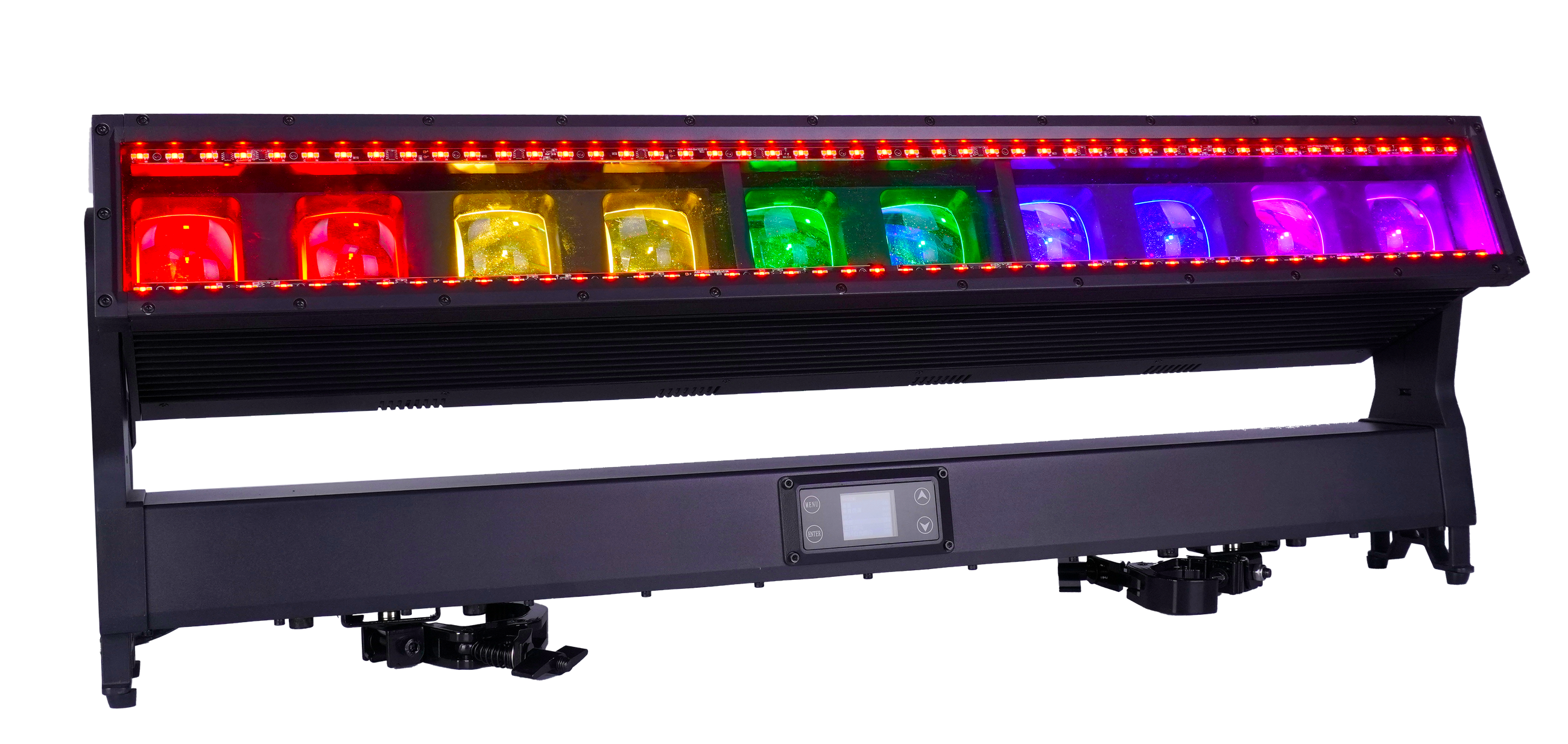
10×60W LED Moving Bar IP65
An IP65 linear Moving Bar platform for projects that need RGBW cells, auxiliary line sources, motorized zoom and extended control modes.
- 10 × 60W RGBW
- 5°–35° zoom
- IP65
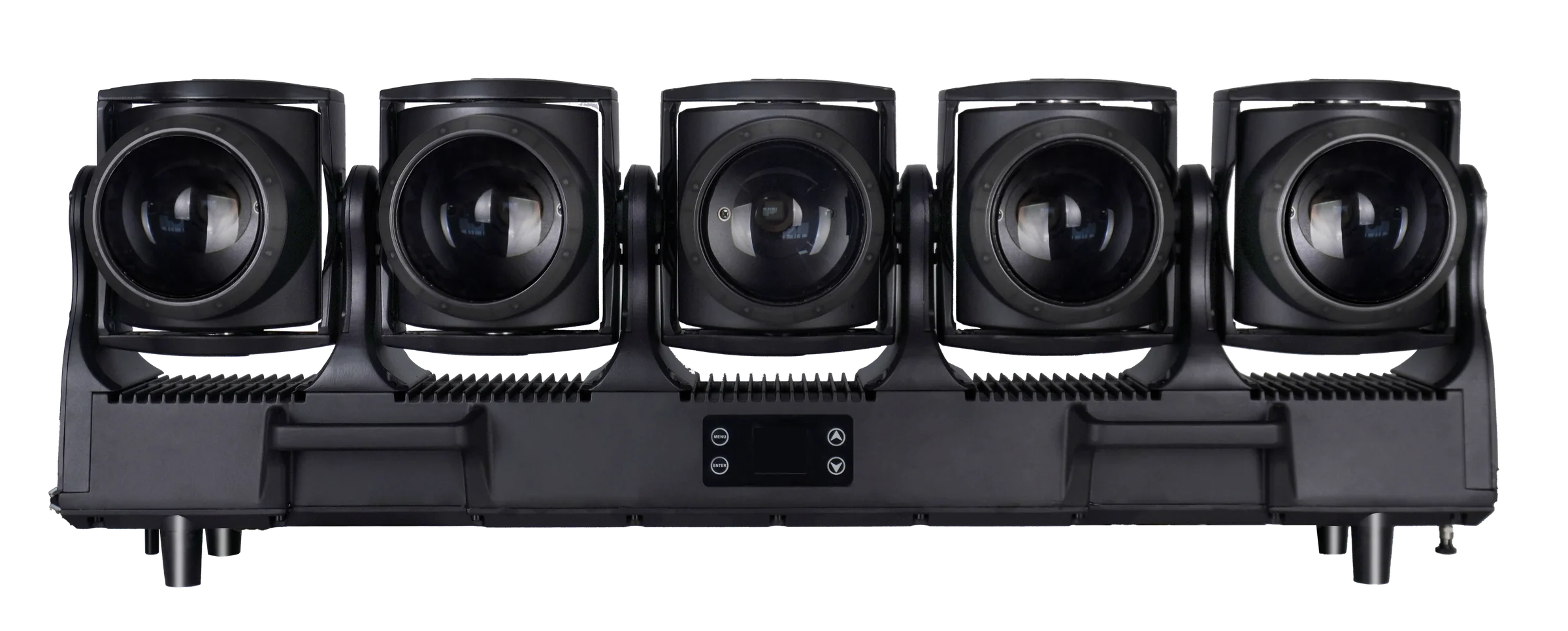
5×120W LED Tornado Waterproof
A five-head Tornado platform for multi-source movement, zoom and outdoor-system planning.
- 5 × 120W RGB + Lime
- 3.5°–45° zoom
- IP65
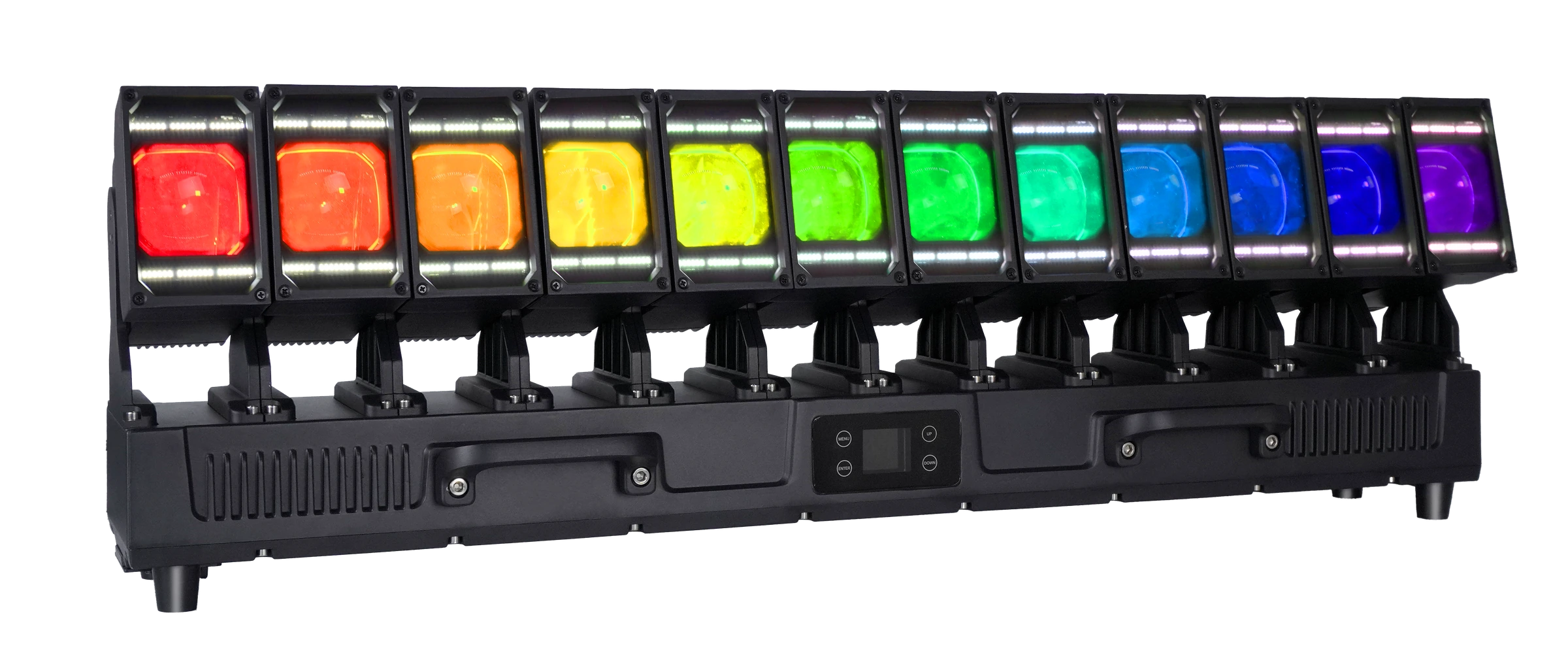
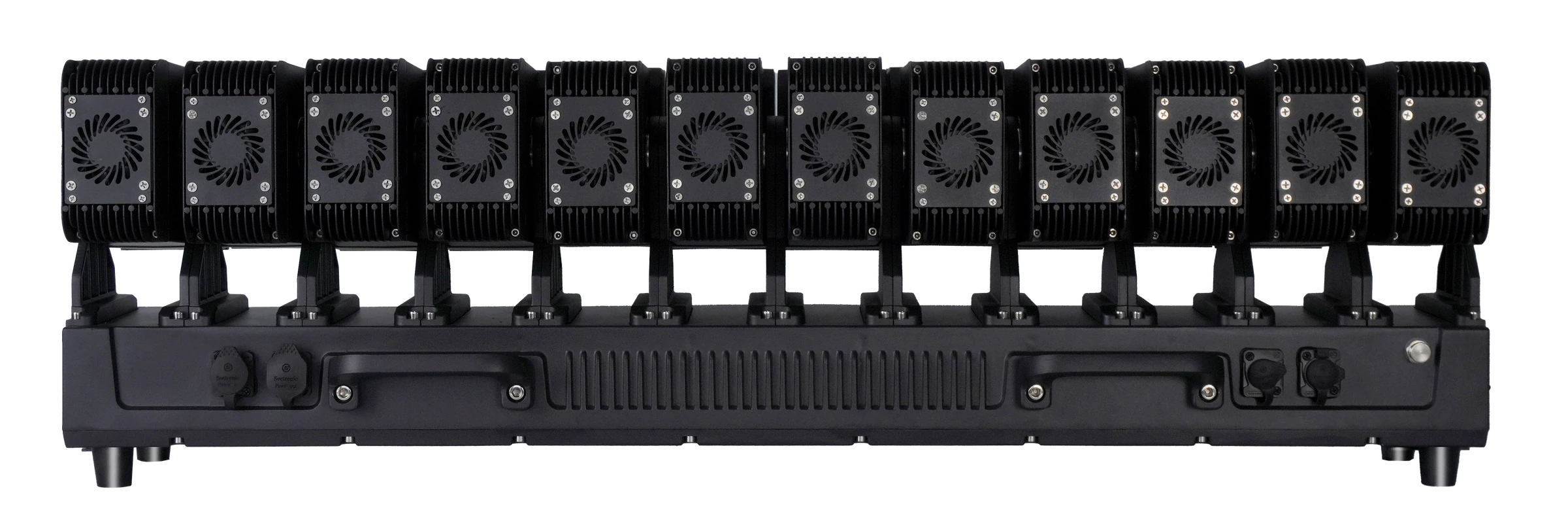
12×60W LED Waver Moving Head IP65
An IP65 twelve-head Waver platform with RGBW moving heads and a white and golden-amber auxiliary array.
- 12 × 60W RGBW
- IP65
- 26CH to 329CH
DOWNLOADS
Technical files for evaluation
FREQUENTLY ASKED QUESTIONS