
Start with project information
Introduction
The right wash fixture is the one that performs the required job repeatedly, fits the control and service workflow, and arrives with documentation that the project team can check.
LED wash moving heads can look similar in a catalogue while behaving very differently in a theatre, rental fleet or touring package. A high LED wattage does not by itself describe usable illuminance, field uniformity, color quality, zoom behavior, noise, motion or reliability. Likewise, an impressive effects demo does not tell a project team how many control channels the fixture consumes, whether a console profile has been tested, or how quickly a damaged module can be serviced.
This guide provides a repeatable decision process for lighting professionals. It separates application requirements from product claims, identifies the project files, and shows how to move from a broad LED wash moving head category to a defensible shortlist. The objective is not to find one universal fixture. It is to identify a documented configuration for a defined operating and commercial context.
Working definition
What Is an LED Wash Moving Head?
An LED wash moving head is an automated luminaire designed to place a colored or white field of light across scenery, performers, architecture or audience areas while providing remote pan and tilt positioning.
The word wash describes coverage rather than a single optical construction. Some fixtures prioritize smooth, even fields. Others combine wash coverage with motorized zoom, individually controlled cells, rotating lenses, halos or pattern effects. These additional capabilities can create useful visual layers, but they also change programming time, DMX consumption, thermal load, mechanical complexity and purchase price.
- Wash
- A broad field used to illuminate an area or surface. Project teams should check field shape, edge behavior and uniformity at relevant distances instead of relying only on the word wash.
- Motorized zoom
- A remotely adjustable optical range that changes the beam from narrower to wider coverage. The angle range matters, but transition quality, repeatability and field consistency across the range matter as well.
- Cell or pixel control
- The ability to control individual emitters or defined zones separately. It enables patterns and motion-like effects on the face of the fixture, but requires suitable channel modes, fixture profiles and programmer time.
A project team should therefore describe the required behavior before selecting a subtype. A compact indoor wash for front light is a different procurement problem from a camera-facing effects fixture, a high-trim touring wash or a unit intended for exposed environments. Product taxonomy is useful for navigation; application project information is what completes the specification.
Application brief
Define the Job Before Comparing Fixtures
A useful request for quotation begins with the operating problem, not a copied model number.
Build the application brief
- 011. Map the space
Record trim height, typical throw, target width, mounting positions, viewing angles and obstructions. Note whether the fixture must cover scenery, performers, audience, architecture or several targets during one show.
- 022. Define the visual role
Decide whether the priority is even wash coverage, saturated color, tunable white, narrow aerial looks, faceplate effects, pixel patterns or a combination. Rank these outcomes so secondary effects do not displace the primary lighting task.
- 033. Document the control system
List consoles, network protocols, available universes, preferred fixture personalities and profile formats. Calculate the channel budget for the complete rig rather than one fixture.
- 044. Define the operating environment
Record indoor or exposed use, expected temperatures, dust, moisture, audience proximity, acoustic sensitivity, duty cycle, power distribution and local safety requirements. Environmental suitability must be supported by the exact model documentation.
- 055. Define fleet economics
Include unit count, spares strategy, transport method, handling limits, service capability, acceptable downtime, consumable parts, documentation language and the expected period of use.
| Decision area | Questions to answer | project files |
|---|---|---|
| Coverage | What area, distance and trim must one fixture serve? | Photometric report or measured trial at relevant zoom settings |
| Color | Which saturated colors, pastels and whites are critical? | Emitter description, calibrated demo and camera test if applicable |
| Control | How many channels and universes are available? | Current DMX chart and tested console profile |
| Environment | Where and under what conditions will the fixture operate? | Model-specific ingress, temperature and operating documentation |
| Service | Who maintains the units and what downtime is acceptable? | Exploded view, parts policy, service workflow and warranty terms |
| Logistics | How will units be packed, lifted and transported? | Approved dimensions, weights, packing list and case proposal |
Engineering check
Key Features to Evaluate
Compare functions in the order that they affect the job: optics, color, measured output, control, motion, structure and documentation.
Optics and motorized zoom
A zoom range is useful only when the resulting field suits the target. Ask to see the narrow, middle and wide positions at the actual throw distance. Look for edge quality, hot spots, color separation, spill and changes in field uniformity. Check how smoothly the mechanism travels, whether it repeats positions after homing, and whether coarse and fine control are available when precise cueing matters.
Color engine
Emitter labels describe hardware channels, not the final quality of the mixed light. RGBW adds a dedicated white emitter; RGBL adds lime. Neither architecture is automatically superior for every job. Optical mixing, emitter binning, calibration, dimming behavior and software determine the result. Compare the colors your application actually uses, including low-level fades and camera rendering, and confirm that the manual and control profile use consistent channel names.
Output and photometric validation
LED input wattage is not a substitute for photometric performance. Request measurements that identify distance, zoom setting, color state, units and test conditions. For a fleet purchase, sample more than one production unit when possible and compare consistency. If photometric data is not available, conduct a controlled side-by-side trial and record meter position, fixture settings and ambient conditions so the result can be repeated.
Pixel and zone control
Individual cells and ring or zone modes can turn the face of a wash fixture into a visual surface. Before paying for that capability, confirm how it is mapped, which channel personality exposes it and whether the preferred console profile matches the supplied DMX table. Estimate the additional universe count and programming hours. For many shows, a lower-channel mode may provide the required wash functions with simpler operation; the high-channel mode remains available for effects-heavy cues.
DMX and network protocols
DMX512 remains the core lighting-control link, while RDM can support device discovery and remote parameter management on compatible systems. Art-Net and sACN transport lighting data across Ethernet networks. Protocol names alone do not prove interoperability. Confirm addressing, merge behavior, network settings, profile availability and the precise software versions used during testing. Refer to the ESTA published standards and the official Art-Net specification when designing the control architecture.
Motion and positioning
Evaluate more than the published pan and tilt range. Observe slow moves, diagonal travel, direction changes, homing time, positional repeatability and noise. Test the unit at realistic hanging orientation and with typical cues. In theatre or broadcast environments, mechanical and fan noise may be part of the acceptance criteria; in touring, speed, recovery and repeatability may carry more weight.
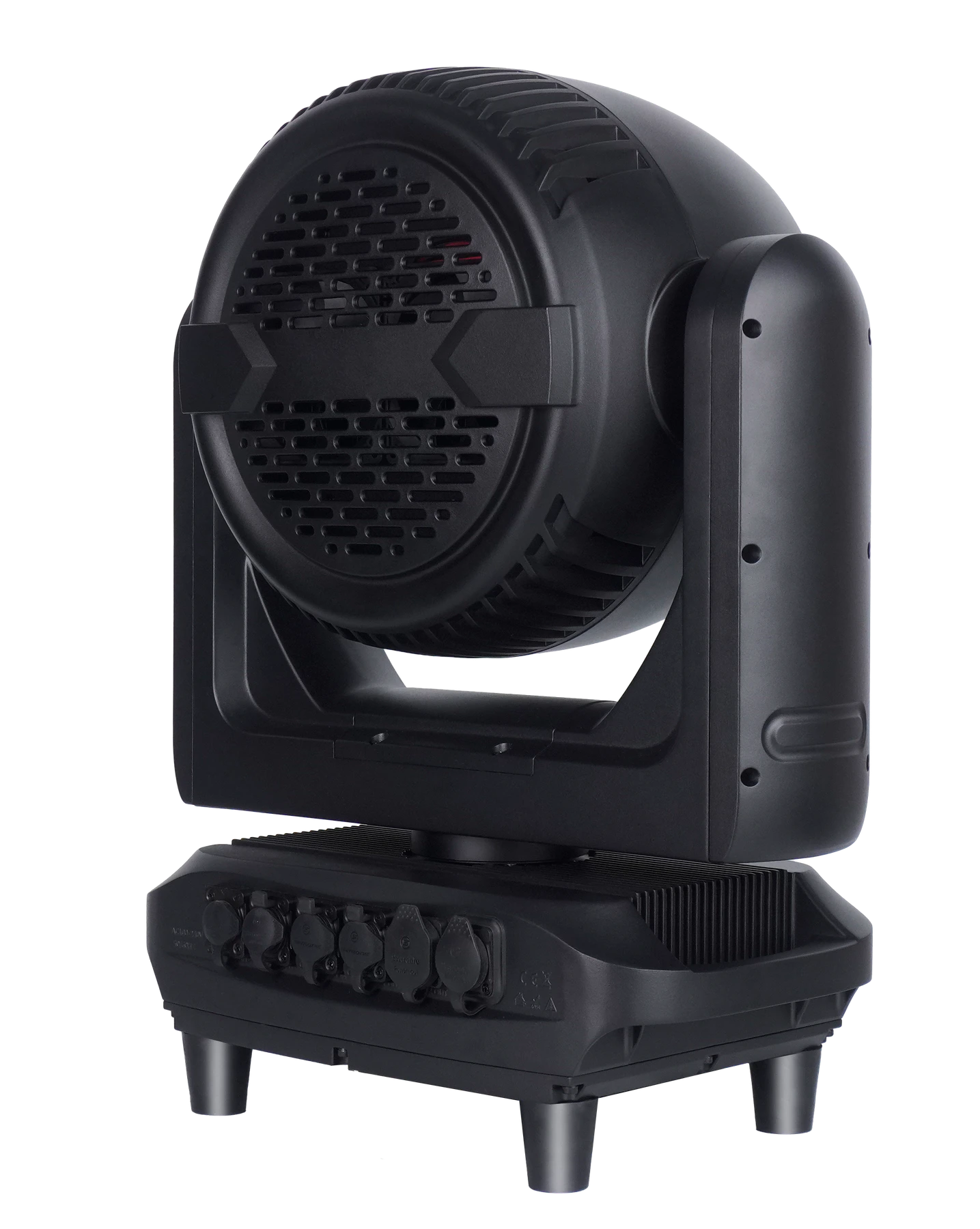
Build, maintenance and documentation
Shortlist with traceability
Technical Comparison
A comparison table should distinguish published values, test observations and open questions.
| Field | What it can tell you | What it cannot tell you alone |
|---|---|---|
| LED configuration | Emitter count, nominal input and color channels | Usable output, color quality, thermal behavior or consistency |
| Zoom range | Documented minimum and maximum optical angles | Field quality, transition smoothness or repeatability |
| DMX modes | Possible control footprints and feature access | Profile accuracy, console compatibility or programming effort |
| Network protocols | Supported transport and management options | Network design quality or interoperability with every controller |
| Ingress notation | A declared protection level when tied to the exact configuration and project information | Suitability for every outdoor condition or operating method |
| Weight and dimensions | Handling, rigging and case-planning inputs | Packed logistics unless the approved packing specification is also supplied |
| Model | published product facts | Project team interpretation | Documentation status |
|---|---|---|---|
| AL1940WZ | 19×40W RGBW; 7°–45° zoom; IP20; individual control; rotating lens; halo | A documented indoor model for project teams evaluating RGBW wash plus faceplate effects. | Catalogue/manual facts used here only; request the current released documents with the quotation. |
Not a universal ranking
Recommended Products for Evaluation
These models illustrate different shortlist directions. Final suitability depends on the application brief, evaluation sample and approved production documents.
Match the operating context
Application-Specific Selection
The same feature can be essential in one application and unnecessary complexity in another.
Concert and touring
For concert and touring systems, evaluate zoom versatility, cue repeatability, network workflow, rigging speed, transport protection and access to replacement parts. Test the fixture in haze and at expected trim. A high-channel effects mode may be valuable, but the network and universe plan must scale to the full rig.
Rental and event production
A rental fleet needs repeatable behavior across units, practical channel modes, durable handling points and a clear service route. Compare time to prep, address, test, clean and repack a fixture. Ask whether replacement modules and profiles will remain available through the planned fleet life.
Theatre and live performance
For theatre and live performance, assess low-level dimming, color transitions, slow motion, positional repeatability and acoustic behavior. Evaluate white and skin-tone rendering with the production's camera and scenic materials. A smaller control mode may be preferable when faceplate effects are not part of the design.
Exposed or outdoor projects
Do not specify exposed use from a model name, connector appearance or unsourced badge. Request the current ingress report for the exact configuration, check operating and maintenance instructions, and define weather monitoring, cable management, drainage, inspection and shutdown procedures. A protection code does not remove the need for a site-specific operating plan.
From brief to purchase order
Procurement Workflow
- 01Create a weighted requirement matrix
Score only application-relevant criteria. Give mandatory items a pass/fail gate and keep desirable effects separate from core performance.
- 02Request a controlled document pack
Ask for model and revision identifiers on the manual, DMX chart, drawing, photometric data, environmental project information, packing list, warranty terms and available fixture profiles.
- 03Run a sample acceptance test
Use a written cue list covering output, zoom, colors, fades, motion, control modes, network behavior, reset, noise and thermal operation. Record firmware and profile versions.
- 04check service and logistics
Confirm unit and packed handling data, case configuration, spares, repair authorization, parts availability and response route. Calculate the landed and operating cost, not only the unit price.
- 05Inspect production and delivery
Use incoming checks that repeat the sample acceptance criteria on an agreed quantity of units. Keep serial, firmware and test records for fleet tracking.
If you are comparing a shortlist for distribution, rental or project use, send AOLAIT the application brief through the contact form. Include target quantity, country, project team type, control platform and required documents. The response can then focus on configuration and project information rather than a generic price list.
RECOMMENDED PRODUCTS
Models to evaluate against your brief
We organize model-specific product facts and available technical files to support fixture comparison and project planning.
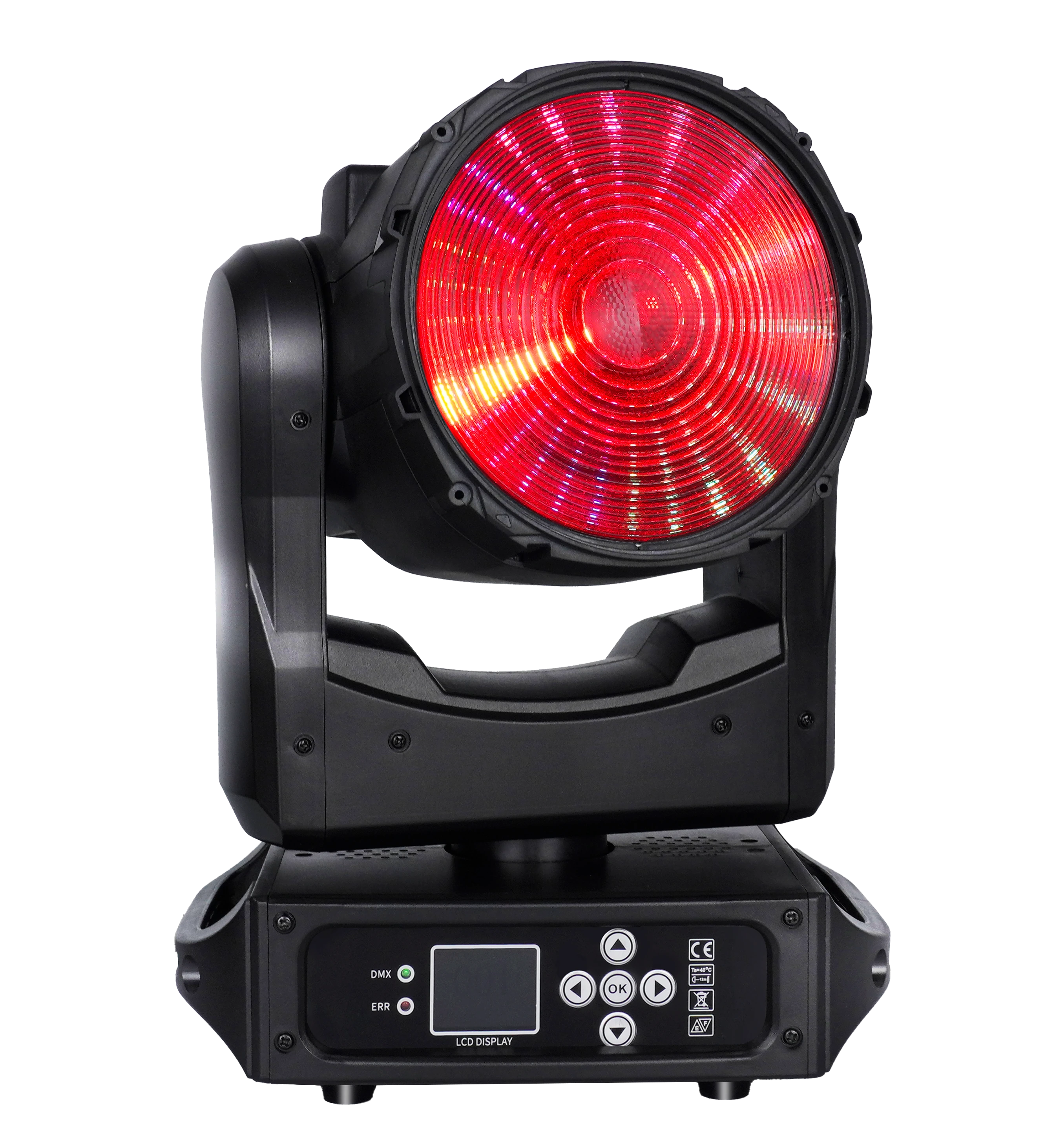
150W LED Wash ONE-effect Moving Head
A compact Zoom Wash platform for comparing a single-source RGBL engine, a focused zoom range and an auxiliary pixel array.
- 150W RGBL
- 19°–27° zoom
- Five DMX personalities
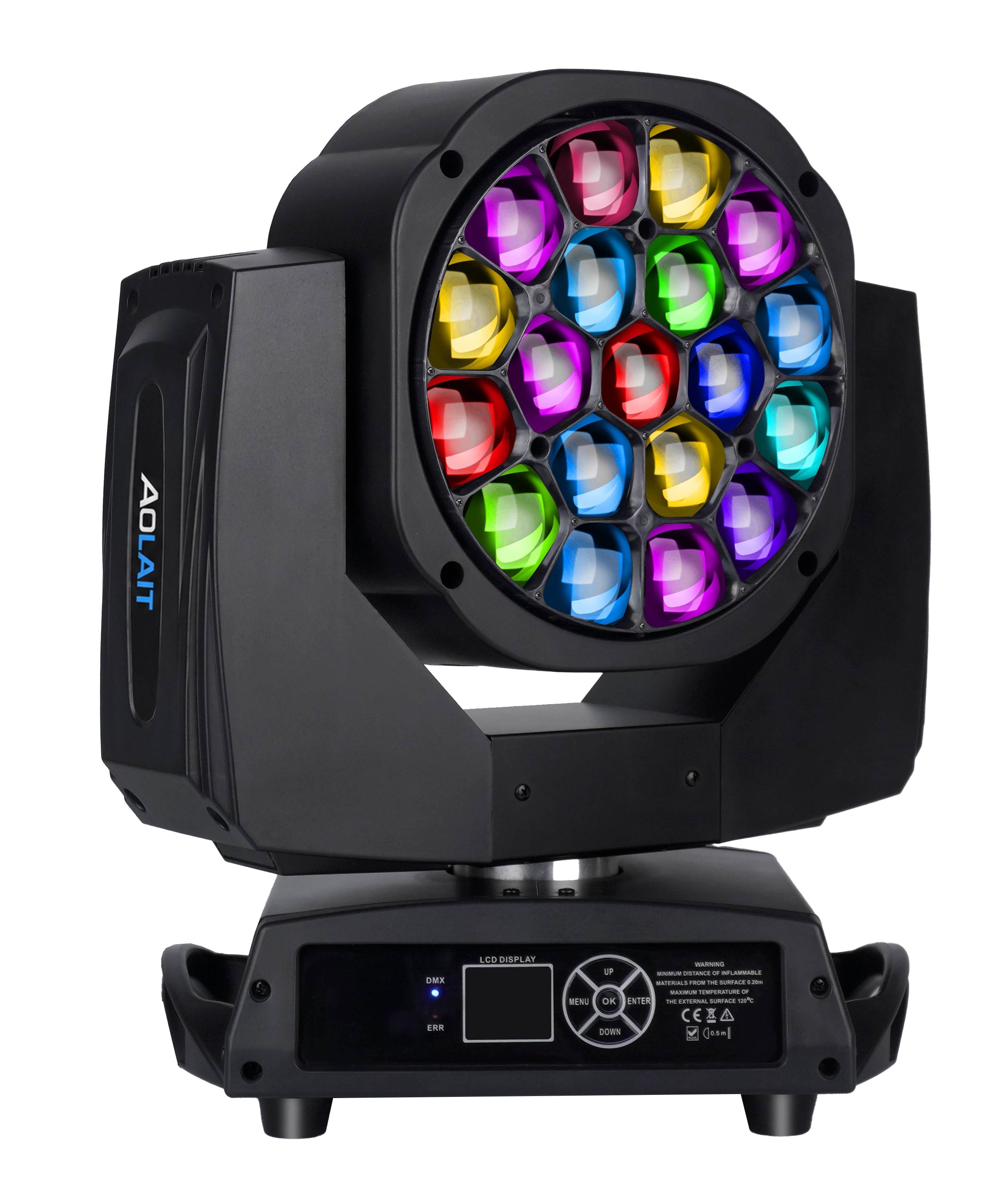
19×15W LED Bee Eye Moving Head
A Bee Eye platform for comparing pixel control, rotating optics, zoom coverage and console programming depth.
- 19 × 15W RGBW
- 4°–60° zoom
- Seven DMX personalities
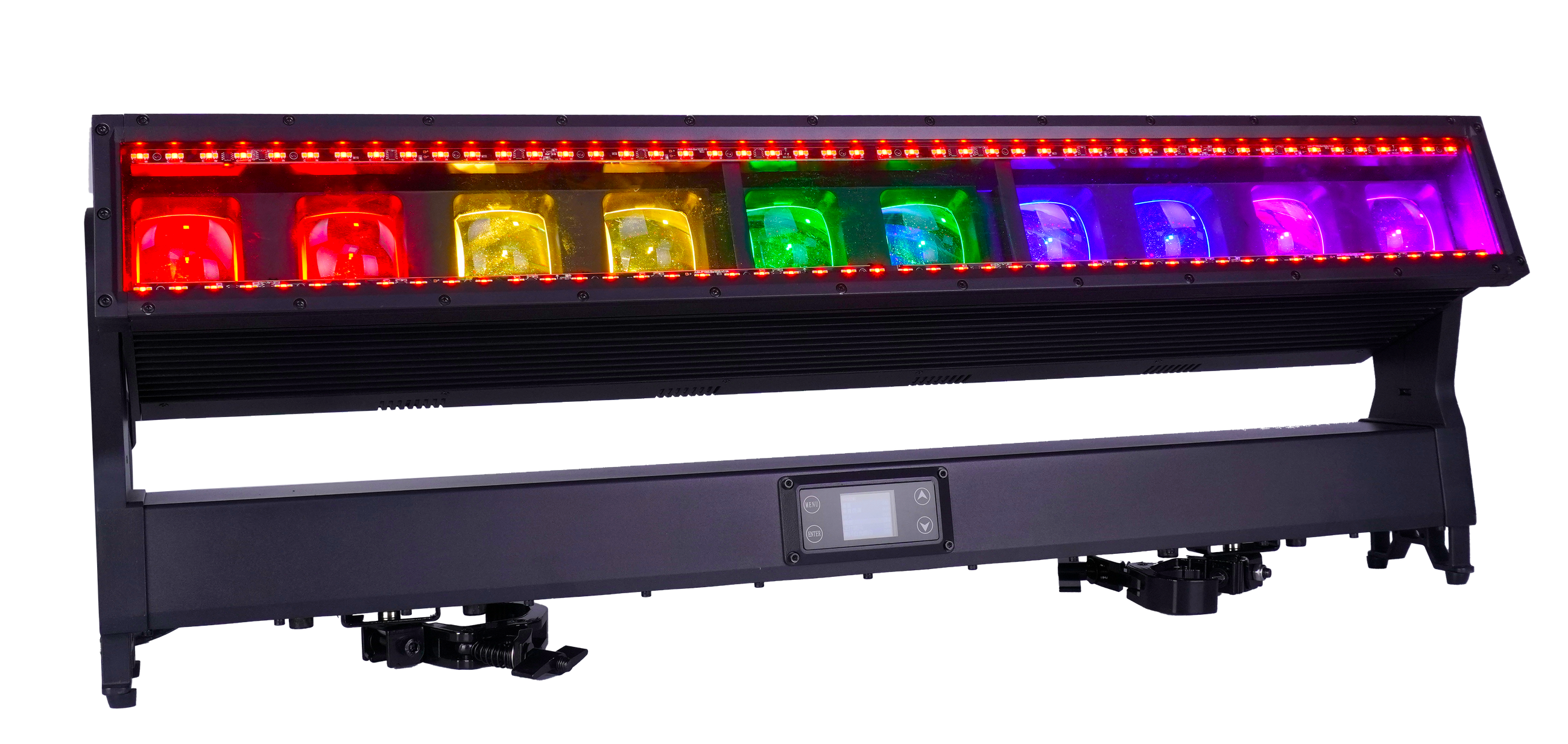
10×60W LED Moving Bar IP65
A linear Wash FX platform for comparing product architecture, main pixels, auxiliary line effects and outdoor-system planning.
- 10 × 60W RGBW
- 5°–35° zoom
- IP65
FREQUENTLY ASKED QUESTIONS