
Decision first
Wash and beam describe different visual jobs
The most useful comparison starts with what the audience and camera must see, not with a catalogue headline.
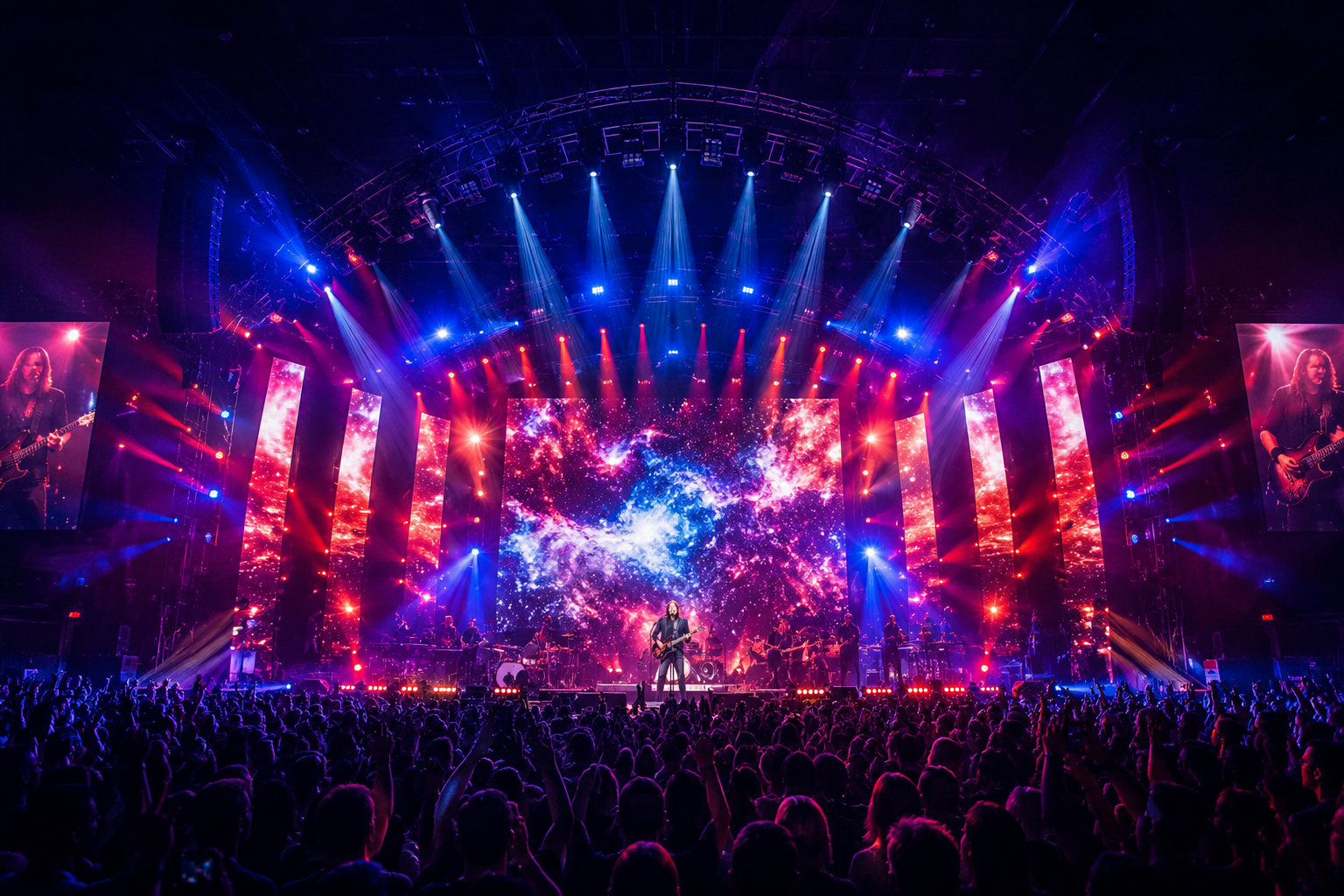
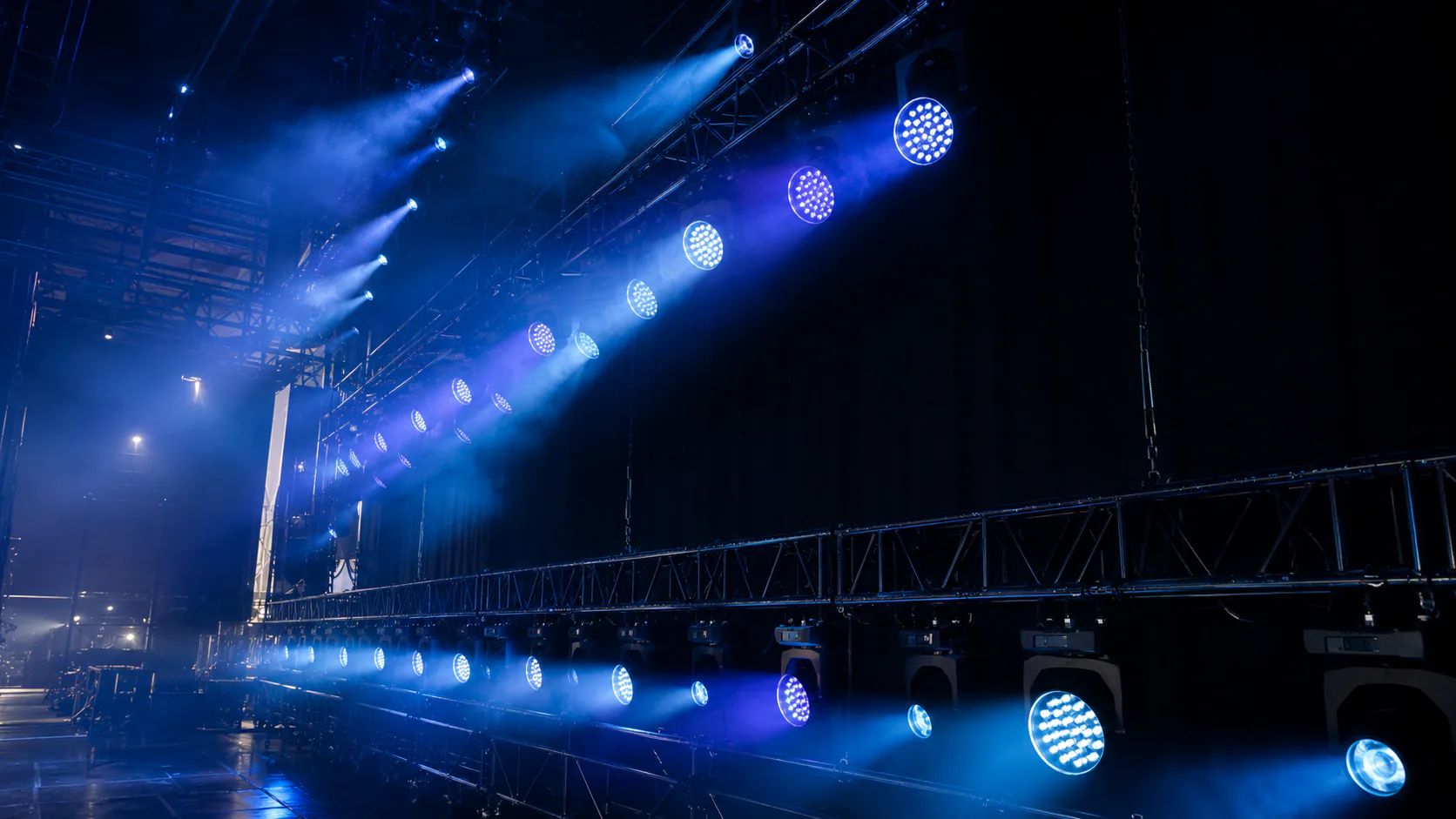
A wash moving head is designed to place an area of color or white light across people, scenery, drape, set pieces or architecture. Its optical system aims for usable coverage, a controlled transition at the edge and color that can be layered with other fixtures. A beam moving head concentrates output into a much narrower shaft. The visible result is often an aerial line, fan, cone or moving pattern, particularly when haze or atmospheric particles reveal the light path.
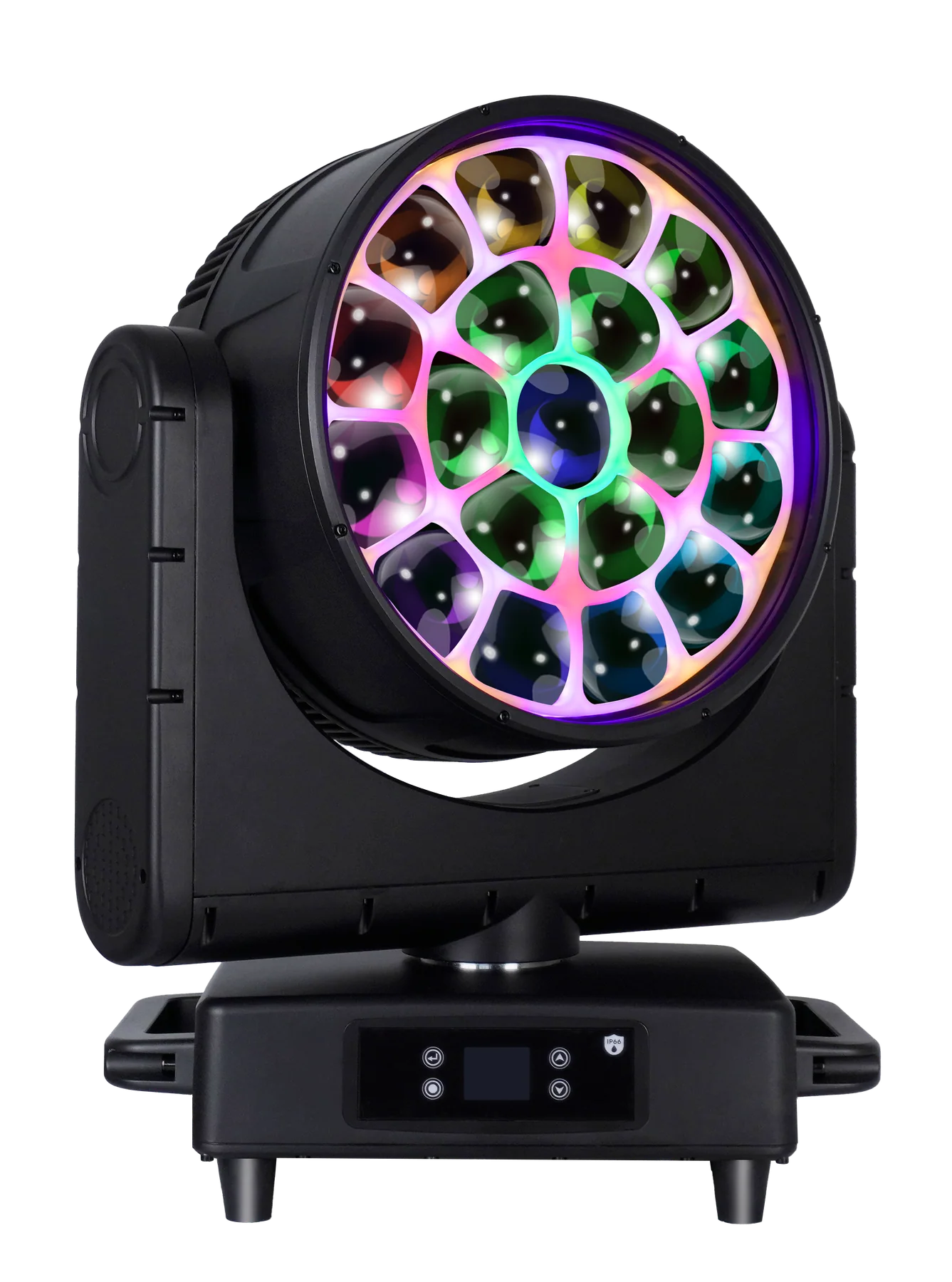
These roles overlap at the edges. A zoom wash can create a tighter look, and an FX-oriented Bee Eye fixture can produce narrow cell images as well as coverage. A beam fixture may also offer color and gobos. That overlap does not remove the core decision: is the fixture expected to light a surface, create an aerial object, or switch credibly between both jobs? Write that requirement before comparing models.
| Decision factor | Wash moving head | Beam moving head |
|---|---|---|
| Primary visual task | Broad, blended coverage | Narrow aerial impact |
| Typical subject | Performers, scenery, walls and stage zones | Air, haze, audience-facing patterns and long visual lines |
| Optical project files | Beam and field angles, zoom range, distribution and photometrics | Beam angle, center intensity, focus behavior and photometrics |
| Programming priority | Color, dimming, zoom and repeatable coverage | Movement, focus, color, prism/gobo or cell effects where provided |
| Common mistake | Selecting by total wattage without checking field quality | Assuming a bright lens photograph proves venue-scale aerial performance |
Optical system
Beam angle, field angle and zoom determine what reaches the stage
Nominal LED power cannot tell a project team how the light is distributed.
Beam angle usually describes the central, higher-intensity portion of the output, while field angle describes a wider boundary where useful light remains. The exact measurement convention should be stated in the photometric report. For a wash, the relationship between the bright center and the outer field affects how easily adjacent fixtures blend. For a beam, the central intensity and edge definition affect the perceived shaft and its visibility at distance.
Zoom changes that distribution. A motorized zoom can let one wash fixture support tighter backlight positions and wider front or scenic coverage, but the output at the narrow and wide ends will not behave identically. Ask for data at relevant zoom positions. The updated
AL1950WX 19×50W RGBL wash moving head documents a 6°–55° motorized zoom, making it a useful example of why project teams should evaluate more than one optical position. Its protection and emitter terminology still require final document confirmation, so the zoom value should be tied to the updated model and current quotation.
Application planning
Match the fixture to the venue, camera and atmosphere
The same fixture can look convincing in a showroom and unsuitable in the actual production environment.
Concert and touring rigs
Touring designers often need broad color systems for performers and scenery plus narrower aerial layers for musical accents. If one fixture type must carry several jobs, examine a wash or Bee Eye FX platform with a meaningful optical range and programmable cells. If the design depends on long, parallel shafts, dedicated beams may remain the more predictable choice. Rig weight, case density, power distribution and show-file stability should be evaluated alongside appearance.
Theatre, worship and camera work
Theatre and worship applications usually place greater emphasis on even coverage, repeatable color, quiet operation and controlled dimming. Camera work adds flicker, color-rendering and refresh-frequency questions. A dramatic beam effect may be useful for selected cues, but it does not replace a wash system that can light faces and surfaces. Request camera tests using the intended frame rate and shutter settings rather than accepting a general statement that a fixture is camera-ready.
Clubs, festivals and audience-facing effects
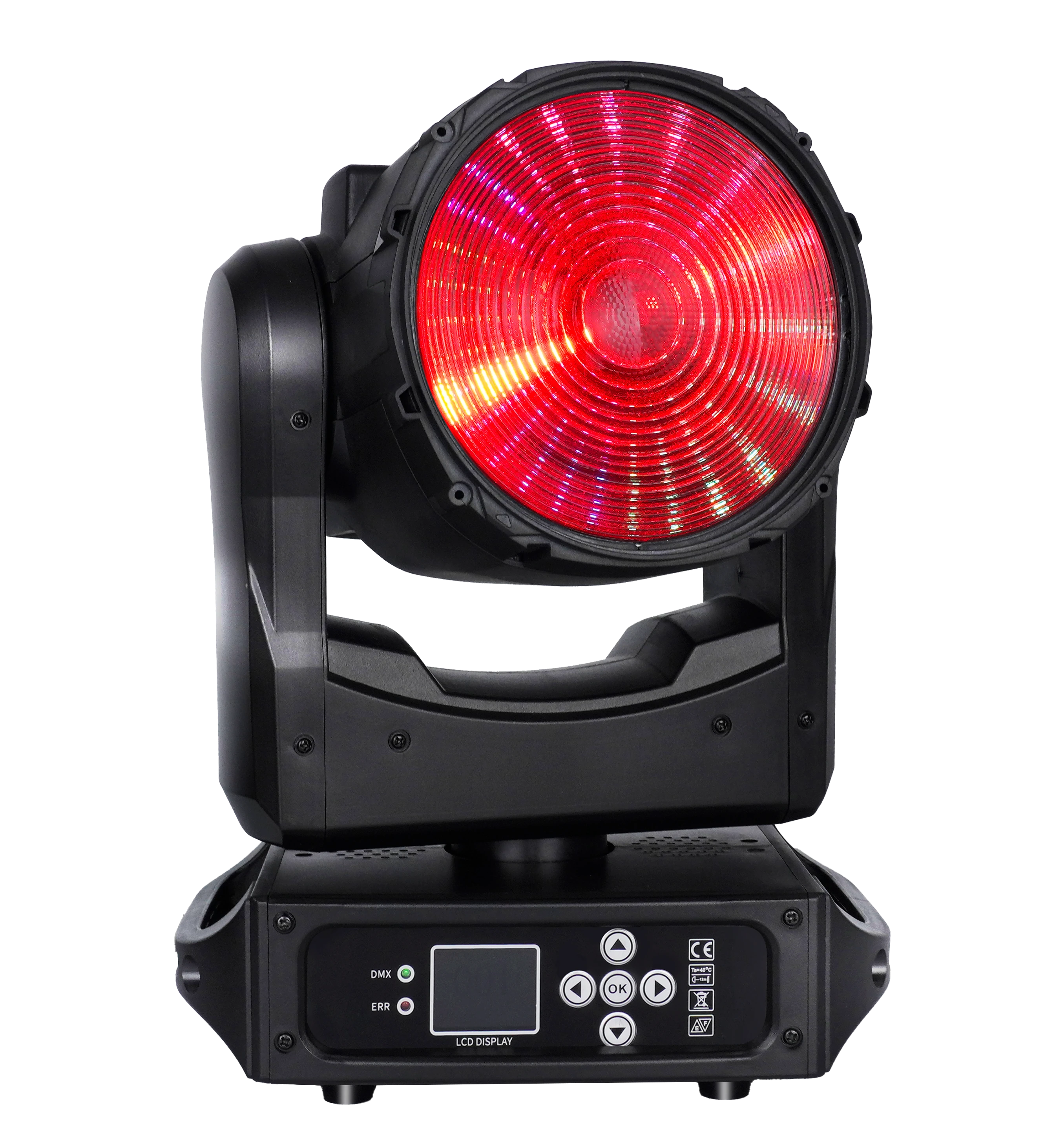
A Zoom Wash effect moving head can sit between conventional categories by combining broad wash coverage, dynamic effects and tighter moving output. The ALP1980WX check material documents nineteen 80W main LEDs, electric focus, a halo layer and six DMX personalities. Its numeric optical range and definitive ingress status are not approved, so a project team should judge the sample for the exact club, touring or festival use rather than treating the family name as a guarantee.
project information
Compare photometrics and real samples, not lens photographs
A product image shows construction and lens layout; it does not prove output, coverage or throw.
A practical distributor test uses the same mains supply, control values, distance, surface and camera exposure for every sample. Allow fixtures to reach stable operating temperature. Check more than one color and more than one zoom or focus position. A visually impressive saturated color may not predict white-light performance, and a narrow hotspot may not predict usable wash coverage.
- Record the exact model, firmware and operating mode.
- Use identical distance, voltage, zoom/focus and control values.
- Compare white, saturated colors and mixed colors required by the show.
- Check the illuminated surface and the audience-facing lens appearance.
- Retain photos, measurements and sample notes with the purchase approval.
Programming
Color system and channel modes change the creative workload
Optical role is only half of the specification; the control footprint must fit the production system.
Wash fixtures may offer whole-fixture color, ring control or individual cells. Beam fixtures may add focus, gobos, prisms or other effect channels. Bee Eye platforms can expose many cells plus effect engines and halo layers. Extended modes create more creative access, but they consume more DMX slots and require accurate console profiles. A rental company should decide which modes will be standardized before the fleet is delivered.
check the DMX channel planning guide before approving a pixel-heavy fixture. AL1950WX documentation lists 26CH, two 50CH personalities and 127CH control, while ALP1980WX check material lists six personalities from 27CH to 117CH. These examples show why model name and LED count alone do not predict the show-file footprint.
| Question | Why it matters | project information |
|---|---|---|
| Which mode supports the required cues? | Avoids paying a channel penalty for unused functions | Current DMX chart and console test |
| Are cells controlled individually, by ring or through macros? | Changes effect design and universe count | Zone diagram and channel table |
| Does the console profile match firmware? | Prevents mislabeled or missing parameters | Profile/version record and physical test |
| Is RDM or network control documented? | Affects addressing and system design | Model manual and live discovery test |
Fleet economics
Rental teams should compare the complete operating system
The fixture that wins a demonstration can still create avoidable labor and service costs across a fleet.
For rental stock, compare case density, handling points, rigging hardware, connector layout, addressing speed, profile availability, reset behavior and service access. Wash fixtures may earn more days by covering corporate, theatre, worship and concert jobs. Beam fixtures may be more specialized but valuable when aerial effects are central to the show. An FX wash can widen the creative range, but only if programmers and technicians can deploy it consistently.
Use the rental fleet selection checklist to document repeatability and support. Project teams comparing the full AOLAIT LED wash moving head range can then separate general-purpose wash stock from Bee Eye and effect-oriented fixtures.
Procurement workflow
Use a seven-step wash-versus-beam approval process
From creative brief to approved order
- 01Define the visual task
State coverage zones, aerial looks, camera requirements and the cues that cannot be compromised.
- 02Record the venue geometry
Document trim height, throw, stage width, atmospheric policy, rigging limits and power/control infrastructure.
- 03Create separate wash and beam criteria
Specify useful coverage for wash and shaft visibility or beam diameter for beam instead of one generic brightness requirement.
- 04Request model-specific files
Collect the current datasheet, manual, photometrics, DMX chart, drawing, packing data and applicable compliance project information.
- 05Test representative samples
Use repeatable conditions and the intended console; include extended modes only if the show will use them.
- 06Check fleet operations
Evaluate handling, cases, addressing, reset, service, spares and unit-to-unit repeatability.
- 07Lock the approved revision
Attach the model, firmware, profile, documents and sample observations to the purchase order and inspection plan.
Explore all professional stage-lighting products, then narrow the comparison through the LED Wash Moving Head category. Qualified private-label or configuration projects should also define the project information and approval process through AOLAIT OEM stage lighting solutions.
Conclusion
Specify the light that performs the job, then check the exact model
A wash moving head is normally the stronger choice for broad color coverage; a beam moving head is normally the stronger choice for narrow aerial impact. Between them sit zoom washes and Bee Eye FX fixtures that can cover multiple creative roles. The correct decision depends on optical project information, venue geometry, programming capacity and fleet operations—not a single wattage or marketing label.
For a project order, turn the creative preference into measurable acceptance criteria. Request current model-labelled documents, test samples at venue scale and retain the approved configuration with the purchase order. That process makes product comparison useful to sales, programming, operations and after-sales teams at the same time.
RECOMMENDED PRODUCTS
Models to evaluate against your brief
We organize model-specific product facts and available technical files to support fixture comparison and project planning.
150W LED Wash ONE-effect Moving Head
A compact RGBL Zoom Wash platform with an auxiliary pixel array for color, DMX and product-development discussions.
- 150W RGBL
- 19°–27° zoom
- Five DMX personalities
19×80W LED Moving Head Wash Effect
A large-format Zoom Wash platform with a documented 19 × 80W engine, electric focus, RGB halo controls and six DMX personalities.
- 19 × 80W main LEDs
- Electric focus
- 27CH to 117CH personalities
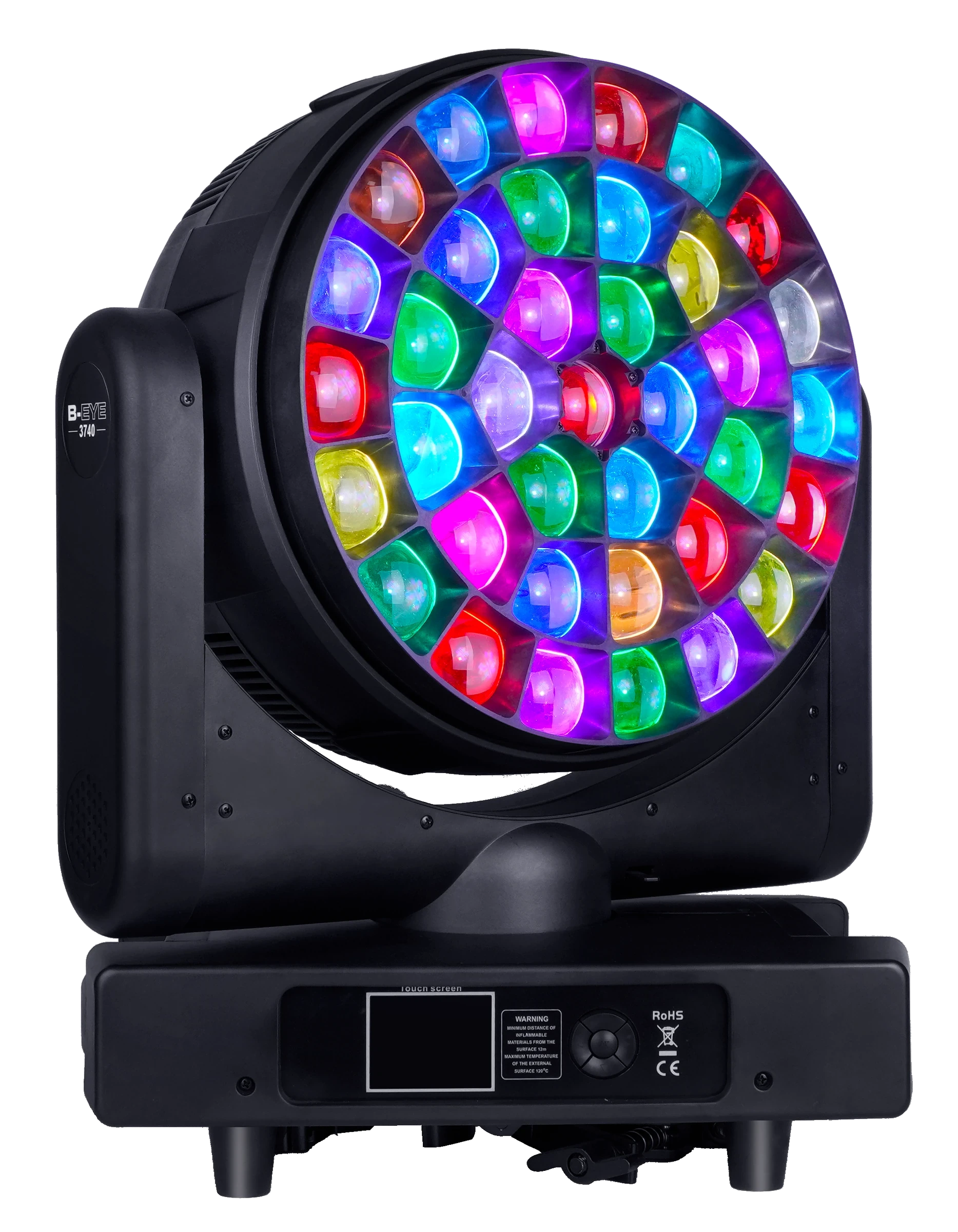
37×40W LED Bee Eye Moving Head
A thirty-seven-cell Bee Eye format for project teams comparing larger optical faces and effect-oriented fixture families.
- 37 × 40W catalogue designation
- Bee Eye format
- Request the current model datasheet
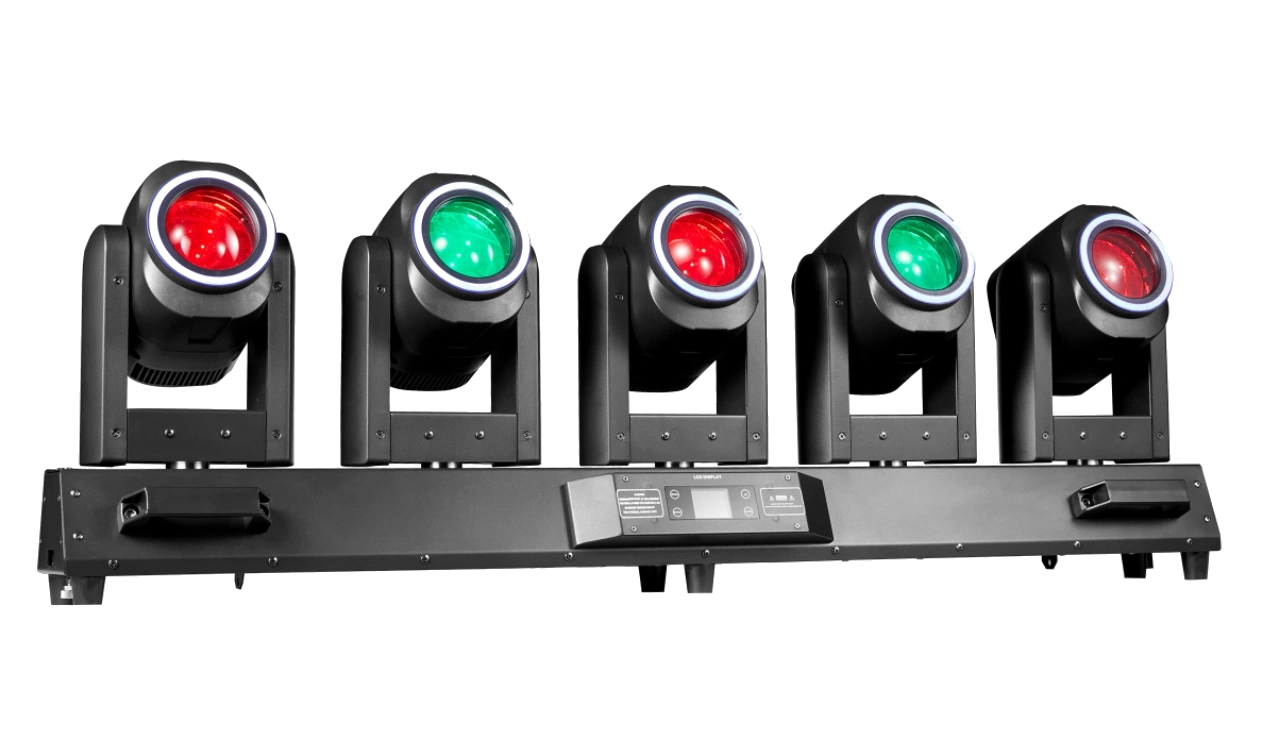
5×80W LED Tornado Moving Head
A five-head Tornado Wash FX platform with independently moving RGBW heads and aura rings.
- 5 × 80W RGBW
- Motorized focus
- 28CH to 88CH
FREQUENTLY ASKED QUESTIONS