
What IP65 Tells You—and What It Does Not
An IP classification defines an enclosure test boundary. It does not replace a model-specific operating, service and maintenance plan.
An IP code describes the protection provided by an electrical enclosure under defined conditions. In IP65, the first digit addresses solid-object and dust protection, while the second addresses water ingress. The IEC provides a concise IP ratings overview, and the official IEC 60529 standard page identifies the standard that classifies enclosure protection.
That classification is important, but narrow. It does not state long-term reliability, condensation control, optical performance or the enclosure condition after service. It also does not make the connected lighting system a safe outdoor power system.
For a focused explanation of the code itself, read what IP65 means for outdoor stage lighting. The rest of this article concentrates on the engineering and maintenance consequences that follow after an IP classification enters the specification.
Why Sealing, Cooling and Service Access Pull in Different Directions
Each improvement changes another part of the design: fewer open air paths increase the importance of heat transfer, while every service opening adds a controlled joint.
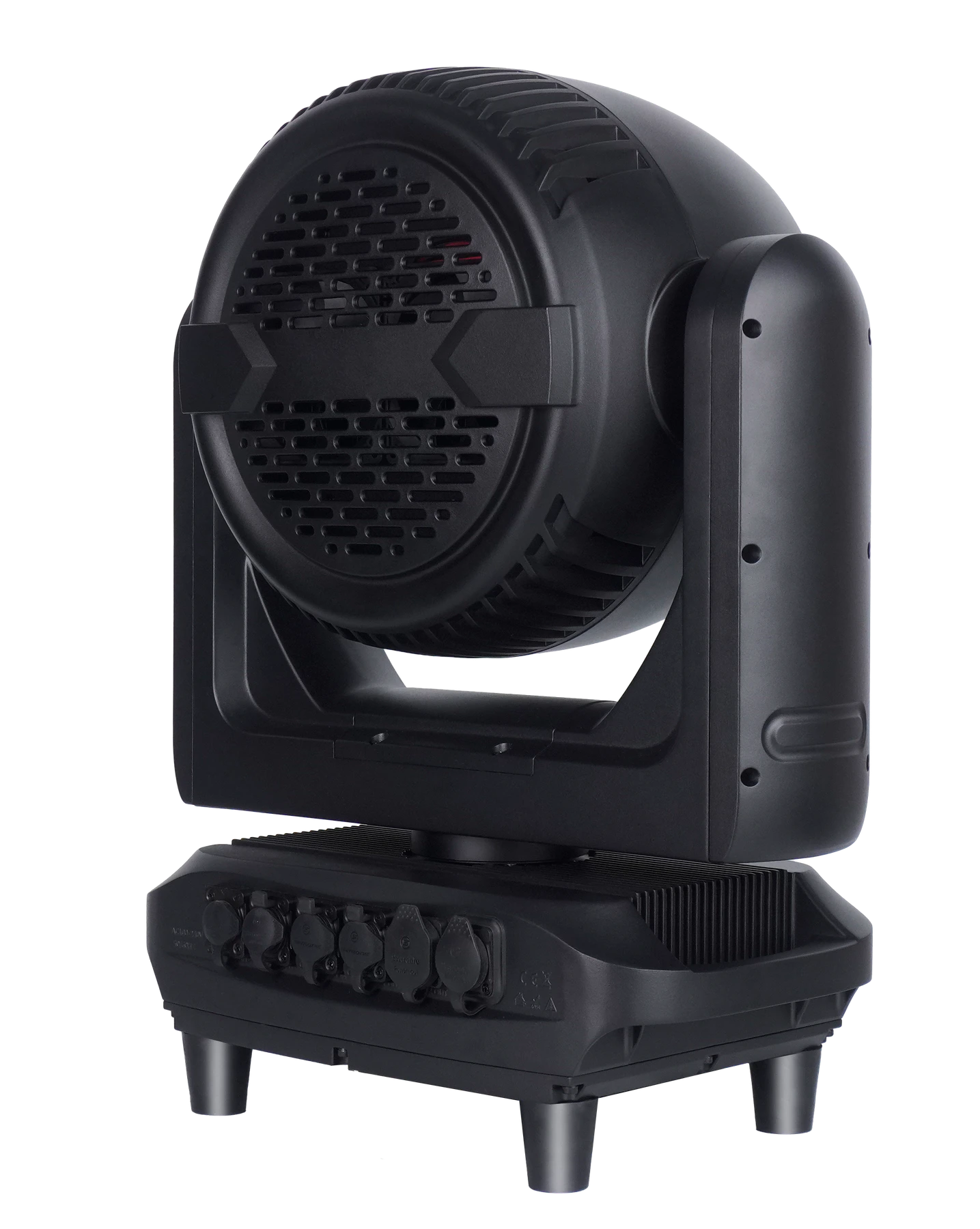
An indoor fixture can exchange air through vents and place access where assembly is convenient. An IP65 moving head wash has a different constraint: every seam, cover and connection must support the enclosure boundary while the light engine and motion system operate.
Sealing reduces uncontrolled air exchange. At the same time, high-power LEDs, drivers, mains power components, control boards and pan/tilt motors produce heat. The design therefore needs a deliberate thermal path from heat-producing parts to areas where heat can be released without compromising the required enclosure performance.
Service access creates a third demand. Technicians need to reach fans, boards, wiring, sensors, motors and optical parts, but each cover adds a joint dependent on gasket condition, surface finish, fastener pattern, cable position and assembly sequence.
| Design objective | Engineering benefit | New control required |
|---|---|---|
| Reduce open air paths | Limits direct dust and water entry | Provide a controlled route for heat transfer |
| Add removable covers | Makes internal service practical | Protect gasket condition, alignment and compression |
| Add power and data interfaces | Supports touring and network control | Match connectors, caps, cables and strain relief |
| Increase light and motor capability | Expands output and movement functions | Manage heat during sustained use, not only startup |
| Protect moving interfaces | Supports pan and tilt in exposed use | Control cable passages, rotating joints and drainage |
The result is a system problem. A strong seal with a weak thermal path can create heat stress; uncontrolled ventilation can undermine protection. Good moving head serviceability comes from designing and documenting these requirements together.
Where Water and Dust Can Enter a Moving Head
Follow the complete enclosure and connected system rather than relying on one prominent seal.
The likely points differ by product architecture, so this list is an inspection map, not a statement about a particular Aolait model.
- Front glass or lens assembly: check the perimeter seal, retaining parts and contact surfaces for displacement, cracking or contamination.
- Head shells and housing seams: inspect the joints around removable panels and rear covers that protect internal electronics.
- Base and connection panel: caps, seals and cable strain relief around power, DMX and network interfaces must remain correctly seated.
- Pan and tilt regions: look for cable abrasion, pinched looms, damaged boots or debris around moving interfaces.
- Cable entries and internal glands: entry hardware must match the cable, remain secure and avoid routing runoff toward the fixture.
- Fasteners and service covers: missing or unevenly seated fasteners can change gasket loading; debris can prevent uniform contact.
Unused ports deserve the same attention as active ones. A covered network port may be protected differently from an open port, and a connected plug depends on the correct mating component. Cable loops should also keep runoff away from connection faces where the installation instructions require it.
This is why “outdoor moving head light” must be evaluated as an installed system. Enclosure, connectors, distribution, rigging, cable routing and the site plan all contribute to exposure risk.
How a Sealed Moving Head Manages Heat
The thermal path must remain effective through the expected cue, ambient condition, orientation and operating duration.
A moving head cooling system can combine several methods. Heat moves by conduction from LEDs and power components into metal structures or heatsinks. Fans may circulate air within a protected region or drive airflow through a designed path. Temperature sensors and control software may adjust fan behavior, report an alarm or protect the fixture when operating conditions exceed its allowed range.
The important question is whether the complete thermal path remains effective through the expected cue, ambient condition, mounting orientation and duration. A quiet fan mode may change cooling; dust can reduce heat transfer; direct sun or trapped roof air can raise ambient temperature.
Why a short power-on test is not enough
A fixture can reset, light and move normally while its internal temperatures are still rising. A brief sample demonstration therefore says little about equilibrium during a long outdoor show. Sustained operation should use representative intensity, color, movement, zoom and effect cues, with the specified fan mode and realistic ambient airflow.
Record alarms, fan changes, unexpected output reduction, resets, noise and changes in color or movement. Do not invent a pass temperature or derating point. Use current operating limits and assess the intended duty cycle, including a repeat after transport and cleaning.
Service Access, Gaskets and Resealing
Opening the housing changes the surfaces and parts that form the enclosure boundary.
Opening an IP65 light can affect the surfaces and parts that form the seal. A controlled service process is therefore essential.
Before opening, isolate power, allow cooling and use a clean, dry service area. Record cover, fastener, cable and connector positions. Qualified technicians should follow the model procedure for mains circuits, LED drivers, movement systems, optics and protective earth connections.
- Gasket condition: look for cuts, flattening, swelling, hardening, contamination or stretching.
- Gasket seating: confirm that the seal sits in its groove without twists, gaps or trapped wires.
- Mating surfaces: remove debris correctly and check for scratches, dents or corrosion.
- Internal wiring: restore clips and bend paths so covers cannot pinch wires or restrict movement.
- Connectors and glands: check locks, seals, strain relief and unused-port caps.
- Fastener sequence: follow the model procedure for even seating. Do not invent torque values.
- Post-service checks: complete required electrical, movement, optical, fan, alarm and enclosure checks.
If a gasket, cover, connector or housing surface is damaged, restore the enclosure before exposed service. Keep the work order, parts, technician, date, fault code and final result with the unit history.
Before, During and After a Wet Outdoor Event
IP65 stage lighting still depends on suitable distribution, cabling, rigging, weather monitoring and a site risk assessment.
Before the event
Inspect lenses, covers, seams, caps, connectors, cables, brackets and safety attachments. Confirm the planned exposure and temperature range. Run representative cues long enough to observe fans, alarms, movement and output. Prepare a stop-work plan for severe weather, flooding or damaged cables.
During operation
Keep power and data connections mated or capped. Route cables away from connection faces and prevent pooling around bases or distribution. Do not open covers or disconnect protected interfaces in rain. Watch fixture status, weather and the electrical system.
After the event
De-energize safely, clean correctly, allow equipment and cases to dry, and inspect for moisture marks, seal damage, connector contamination, corrosion, fan noise and errors. Do not close a wet fixture into a sealed case.
Log the event exposure and corrective action. The broader stage lighting maintenance checklist connects this wet-event process to routine optics, cooling, movement, control and service records. A consistent moving head maintenance history is especially important when fixtures move between wet sites, cold transport and warm storage, making outdoor stage lighting maintenance part of the operating plan.
How to Evaluate an IP65 Moving Head Design Sample
Reproduce the way the fixture will be transported, programmed, operated and maintained.
Use the rental lighting fleet selection checklist to place environmental checks inside a wider decision covering optics, control, handling and the operating workflow.
| Evaluation item | What to check and record |
|---|---|
| Model and IP documentation | Exact model, construction revision, applicable IP statement, operating conditions and current instructions |
| Enclosure and connectors | Glass, seams, covers, fasteners, caps, cable entries, mating connectors and visible seal condition |
| Sustained operation | Representative cues and duration at the intended ambient condition and mounting orientation |
| Fans and noise | Available fan modes, audible behavior, stability and suitability for the venue |
| Alarms and temperature protection | Displayed warnings, logs, response behavior and recovery procedure |
| Multi-unit consistency | Startup, movement, zoom, color, fan sound, error reporting and control response across several units |
| Post-rain function check | Safe dry-down, inspection, controlled power-up and repeat of the functional sequence |
| Service documents and spares | Access instructions, gasket and connector parts, approved consumables and technical support route |
| Firmware and error records | Firmware identity, fixture profile, channel modes, saved errors and update process |
| Transport and site workflow | Cases, drying plan, cable protection, inspection ownership, service labeling and release criteria |
AL1950WX as an Application Example
Use published product facts to define programming and handling checks, then assess the environmental workflow separately.
The Aolait AL1950WX product page presents a 19-cell wash platform for professional show-control evaluation. Its current public product facts are listed below.
| Area | AL1950WX fact |
|---|---|
| Main light engine | 19 × 50W RGBL |
| Auxiliary layer | 210 × RGB backlight LEDs |
| Zoom | 6°–55° motorized zoom |
| Control protocols | DMX, RDM, Art-Net and sACN |
| DMX personalities | 26 / 50 / 50 / 127CH |
| Movement | 540° pan / 270° tilt |
| Net weight | 17 kg |
These facts define useful programming and handling checks: confirm the selected control personality, run sustained RGBL and backlight cues, exercise zoom and movement, compare several units and record fan behavior and errors. For enclosure protection and cooling architecture, request the current model-specific documentation and assess a production-representative sample for the intended outdoor workflow.
AL1950WX is classified in Aolait’s Zoom Wash family. Teams comparing a different physical effect architecture can separately explore the Wash FX moving head collection; that collection is not the product family assignment for AL1950WX.
RECOMMENDED PRODUCTS
Models to evaluate against your brief
We organize model-specific product facts and available technical files to support fixture comparison and project planning.
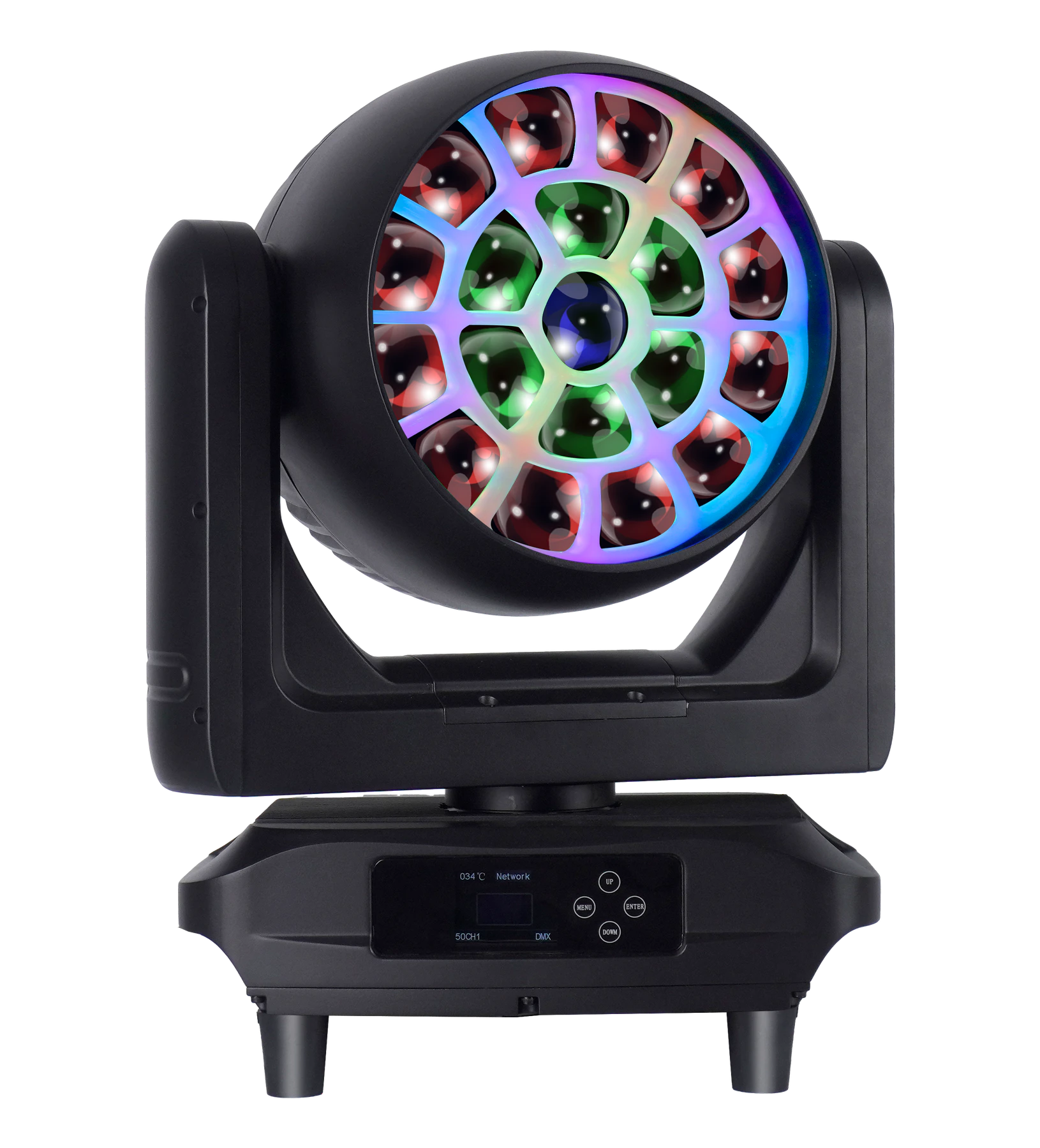
19×50W RGBL LED Wash Moving Head
A 19-cell RGBL wash platform with a separate RGB backlight layer, motorized zoom, four control personalities and network control for professional sample evaluation.
- 19 × 50W RGBL
- 210 × RGB backlight LEDs
- 6°–55° motorized zoom
- 26 / 50 / 50 / 127CH
- DMX / RDM / Art-Net / sACN
- 17 kg
FREQUENTLY ASKED QUESTIONS